How to Study for Medical Licensing Exams Using Only Your Phone (2026 Guide)
Most IMGs preparing for PLAB, USMLE, MRCP or DHA have one thing in common — they do not have unlimited study time. Here is how to turn the phone already in your pocket into a complete exam preparation system.
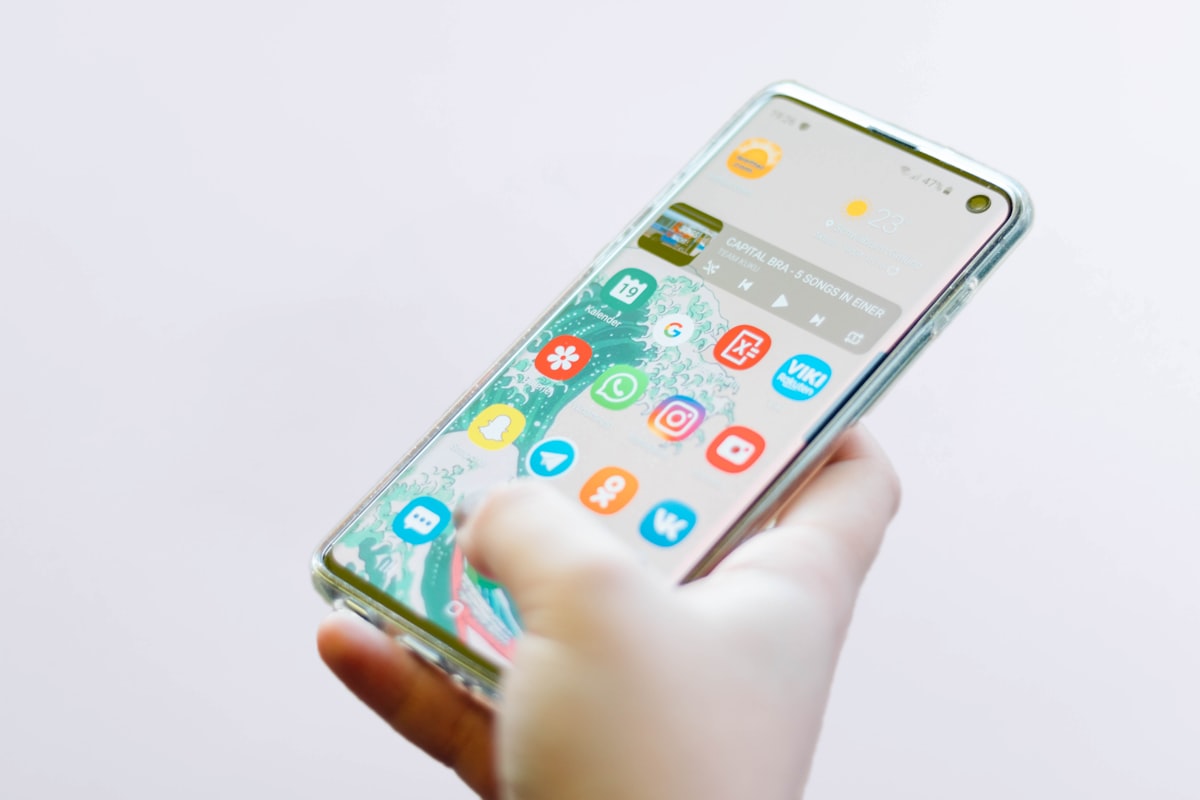
1. Why Your Phone Is the Most Powerful Study Tool You Own
Let's start with a number that should change how you think about exam preparation.
The average person checks their phone 96 times per day. For a doctor preparing for a licensing exam — juggling clinical shifts, family responsibilities, and the pressure of a high-stakes exam — those 96 interactions represent something more important than distraction. They represent short, frequent cognitive touchpoints that, redirected intelligently, can form the backbone of an entire exam preparation strategy.
The old model of medical exam preparation looked like this: block out four hours on a Saturday, open a textbook, read it cover to cover, feel vaguely productive, and retain approximately 20% of what you read by the following week. The Ebbinghaus Forgetting Curve — one of the most consistently replicated findings in cognitive science — tells us that without active retrieval practice, we forget roughly 50% of new information within 24 hours and up to 90% within a week.
A phone-first study approach directly attacks this forgetting curve. Instead of one long session and then silence, you have 8–12 short interactions spread across the day — each one reinforcing the same information at exactly the moment your brain is about to forget it. The total time might be the same. The retention is dramatically different.
This matters enormously for PLAB 1, USMLE Step 1, MRCP Part 1, and every other licensing exam, because the volume of content these exams cover is simply too large to hold in working memory from a single weekly study session. The doctors who pass consistently are not the ones who study the longest in any single session — they are the ones who study most frequently. Your phone makes frequency possible without requiring you to rearrange your life.
2. The Science Behind Mobile Learning That Most Candidates Ignore

Two cognitive science principles underpin why phone-based study is not just convenient — it is scientifically superior to marathon sessions for the type of learning licensing exams require.
Spaced Repetition
Spaced repetition is the practice of reviewing information at increasing intervals — first after one day, then three days, then a week, then a month — timed to catch the information at the exact moment your memory of it is about to decay. A growing body of research shows that spaced repetition produces two to three times better long-term retention than massed practice (the "cramming" model) for the same total study time.
For a MRCP Part 1 candidate who needs to retain the management pathways for 40+ clinical specialties over 4–5 months, this is not a minor efficiency gain — it is the difference between arriving at exam day with knowledge that is accessible and arriving with knowledge that has partially decayed.
Active Retrieval Practice
Retrieval practice — forcing yourself to recall information before seeing the answer — produces stronger memory traces than re-reading the same information. This is known as the "testing effect" and has been demonstrated across hundreds of studies. Every time you answer a practice question on your phone before looking at the explanation, you are engaging retrieval practice. Every time you re-read your notes, you are not.
PLAB 1, MRCP Part 1, and USMLE Step 1 do not test factual recall — they test clinical reasoning applied to novel patient scenarios. This reasoning ability is built through repeated retrieval practice, not through re-reading. A 10-minute question session on your phone bus builds more exam-ready clinical reasoning than 30 minutes of re-reading a textbook chapter at your desk.
Together, these two principles explain why the most effective medical exam preparation platforms are built around short, frequent question sessions with adaptive spacing — not around video lectures or static reading materials. When you open the MedLumen iOS app or the MedLumen Android app for a 10-minute session between clinical rounds, you are not doing a diluted version of "real" studying. You are doing the highest-retention form of studying available.

4. The Phone-First Weekly Study Schedule
This schedule is built for a working doctor with approximately 10–12 available study hours per week. Adjust the weekend blocks proportionally if your available hours differ. The key principle: phone sessions happen during dead time throughout the week; deep-focus sessions happen on weekend mornings when you have cognitive bandwidth for new material.
This schedule produces 11–14 study hours per week. Over 20 weeks that is 220–280 hours — enough to pass any major licensing exam with the right resources.
Cognitive fatigue compounds. A doctor who studies 7 days a week for 12 weeks will perform worse in week 12 than one who took one full rest day per week — even though the second doctor studied fewer total hours. Wednesday (or whichever mid-week day works for you) must be a complete rest from exam content. It is not laziness. It is the mechanism by which your brain consolidates everything studied in the first half of the week.
5. What to Actually Do on Your Phone During Each Session
Having a study session on your phone is not the same as opening Instagram and putting on a YouTube lecture in the background. Here is the session structure that produces results:
Total session time: 15–25 minutes. Total sessions per week following the above schedule: 10–14. This structure works on a commute, in a lunch break, or before bed. It does not require a desk, a notebook, or silence.
6. How Mobile Study Adapts to Each Exam
The mobile study approach described above is universal — but the content focus changes depending on which exam you are preparing for. Here is how to calibrate your daily phone sessions by exam:
| Exam | Phone Session Focus | Weekend Deep-Study Focus | Critical Mobile Topic |
|---|---|---|---|
| PLAB 1 (UK) | NHS clinical decision MCQs, Mental Health Act scenarios | NICE guidelines, GMC ethics framework | UK-specific management protocols — different from global practice |
| USMLE Step 1 | Pathophysiology MCQs, Anki card reviews, organ system questions | First Aid annotations, Pathoma videos | Mechanism-level understanding — not symptom recall |
| USMLE Step 2 CK | Clinical vignettes, next-best-step practice, ethics Qs | UWorld subject blocks, weak area deep-dives | Management algorithms — what to do first, second, third |
| MRCP Part 1 | Best-of-five specialty MCQs, ECG practice, statistics Qs | Clinical Sciences (statistics/genetics), full mock papers | Clinical Sciences — 25 Qs per paper, most candidates underestimate |
| DHA Exam (Dubai) | GP MCQs, UAE health law scenarios, pharmacology Qs | UAE Federal Health Law, Sheryan portal knowledge | UAE law and ethics — 5% of exam, zero coverage in most curricula |
| SMLE (Saudi Arabia) | Internal medicine MCQs, Saudi health guidelines | Community medicine, preventive health deep-dives | Saudi-specific public health content — rarely covered in textbooks |
| AMC CAT 1 (Australia) | Case-based clinical reasoning, prioritisation Qs | Australian guidelines (eTG, AMH), rural health content | Australian-specific disease epidemiology — differs from global norms |
| PMDC NLE (Pakistan) | Basic science MCQs, clinical scenario Qs | PMC Blue Book content map, past paper analysis | Blue Book content coverage — official syllabus differs from MBBS exams |
Regardless of which exam you are sitting, the MedLumen blog has dedicated preparation guides for each — all written by the medical team and updated for 2026 exam formats. Use the blog guides for your weekend deep-study sessions and the app for your weekday mobile sessions.
7. The 4 Mobile Study Mistakes That Waste Your Time
Most of the doctors who try mobile study and declare it "ineffective" are making one of four predictable mistakes. Here is what they are and how to avoid them:
Mistake 1: Using your phone to watch lectures instead of practise questions
Video lectures feel productive. Answering questions feels uncomfortable. This discomfort is the signal that learning is happening — the struggle of retrieval is what builds lasting memory. Watching a 20-minute video on myocardial infarction pathophysiology is passive learning. Answering 10 questions about MI pathophysiology while you are not 100% sure of the answers is active learning. Use your phone for active retrieval, not passive consumption.
Mistake 2: Doing questions without reviewing wrong answers
A study session that ends when you finish answering the questions is half a study session. The explanation review is where the actual learning happens. A candidate who answers 200 questions without reviewing explanations builds confidence without understanding. Confidence without understanding is exactly what produces wrong answers in the real exam.
Mistake 3: Not tracking performance by topic
Without analytics, mobile study drifts toward comfortable subjects. The topics where your accuracy is 85% feel good to practise. The topics where your accuracy is 45% feel bad and get avoided. This is the opposite of what your pass probability needs. Always study your weakest topics first — your phone's analytics make this visible automatically if you use a platform like MedLumen that tracks performance by subject area.
Mistake 4: Using a question bank that isn't calibrated to your specific exam
A generic medical MCQ app is not the same as a question bank built for PLAB 1 or MRCP Part 1. The question style, the clinical framework, the guideline basis, and the difficulty level must match the actual exam you are sitting. Practising with questions written for a different exam or a different clinical system builds the wrong patterns. Your question bank is the most important tool in your preparation — choose one specific to your exam.
Ask three questions about any app you are considering: Does it adapt to your weak areas automatically, or does it show you questions in a fixed order? Do the explanations reference real clinical guidelines (NICE, GMC, USMLE content outline) or just state the correct answer? Was it built specifically for your exam, or is it a generic medical MCQ database? If the answer to any of these is no or unclear, it is not the right preparation tool.
8. Frequently Asked Questions
Can I really pass a licensing exam studying primarily on my phone?
Yes — with two conditions. First, your phone sessions must be active retrieval (questions with reviewed explanations), not passive consumption (videos, reading). Second, you need weekend deep-study sessions for new content and full mock exams, which require the longer cognitive focus that phone sessions between shifts cannot replicate. The phone is your primary study tool, not your only one.
How many questions per day do I need to do on my phone?
For most MRCP Part 1 and PLAB 1 candidates, 20–40 questions per day is the sweet spot during weekday mobile sessions. This is achievable across two or three 10-minute sessions. The key metric is not total daily questions — it is questions reviewed with full explanation engagement. 20 questions with full review beats 60 questions skimmed.
Is the MedLumen app available in my country?
Yes. The MedLumen iOS app is available on the App Store globally, and the MedLumen Android app is available on Google Play worldwide. MedLumen's user base includes doctors from Pakistan, India, Nigeria, Egypt, the Philippines, Bangladesh, and every other major IMG-sending country.
What if I don't have a commute — can I still make this work?
Absolutely. The commute is the most obvious source of hidden study time, but it is not the only one. Meal breaks, waiting time in clinical settings, the 15 minutes before bed, and any queue or transition time during your day collectively add up to 60–90 minutes of available mobile study time even without a commute. The schedule in Section 4 works regardless of whether you drive or take public transport.
Should I do the full mock exams on my phone too?
No — and this is important. Full-length mock exams (180 questions for PLAB 1, 200 questions for MRCP Part 1, 280 for USMLE Step 1) should be taken on a computer screen under conditions that replicate the actual exam. The real exam will be computer-based. Practising full mocks on a large screen builds the visual stamina and pacing calibration the exam requires. Use your phone for the daily question practice; use a computer for timed mocks.
Start Studying Smarter — Download MedLumen Today
AI-adaptive questions for PLAB 1, USMLE, MRCP, DHA, SMLE, AMC and PMDC NLE. Designed for 10-minute mobile sessions. Free trial — no credit card required.