Preparing for high-stakes medical licensing exams can feel overwhelming. Whether you are targeting PLAB, USMLE, MRCP, AMC or regional licensing exams, the pressure to pass preferably on the first attempt is real. The stakes are high, the syllabus is vast and time is often limited. However, the difference between struggling candidates and those who pass confidently often comes down to one thing: strategy.
In this blog, we will break down proven, practical and modern global medical exam preparation strategies that will help you study smarter, retain more and ultimately succeed on your first try. If you have been relying on outdated methods or feel stuck despite studying hard, this blog will completely change your approach.
Many doctors begin their preparation journey with motivation but without direction. They dive into textbooks, watch lectures endlessly and attempt random MCQs, hoping that effort alone will lead to success. Unfortunately, this approach often leads to burnout and poor results.
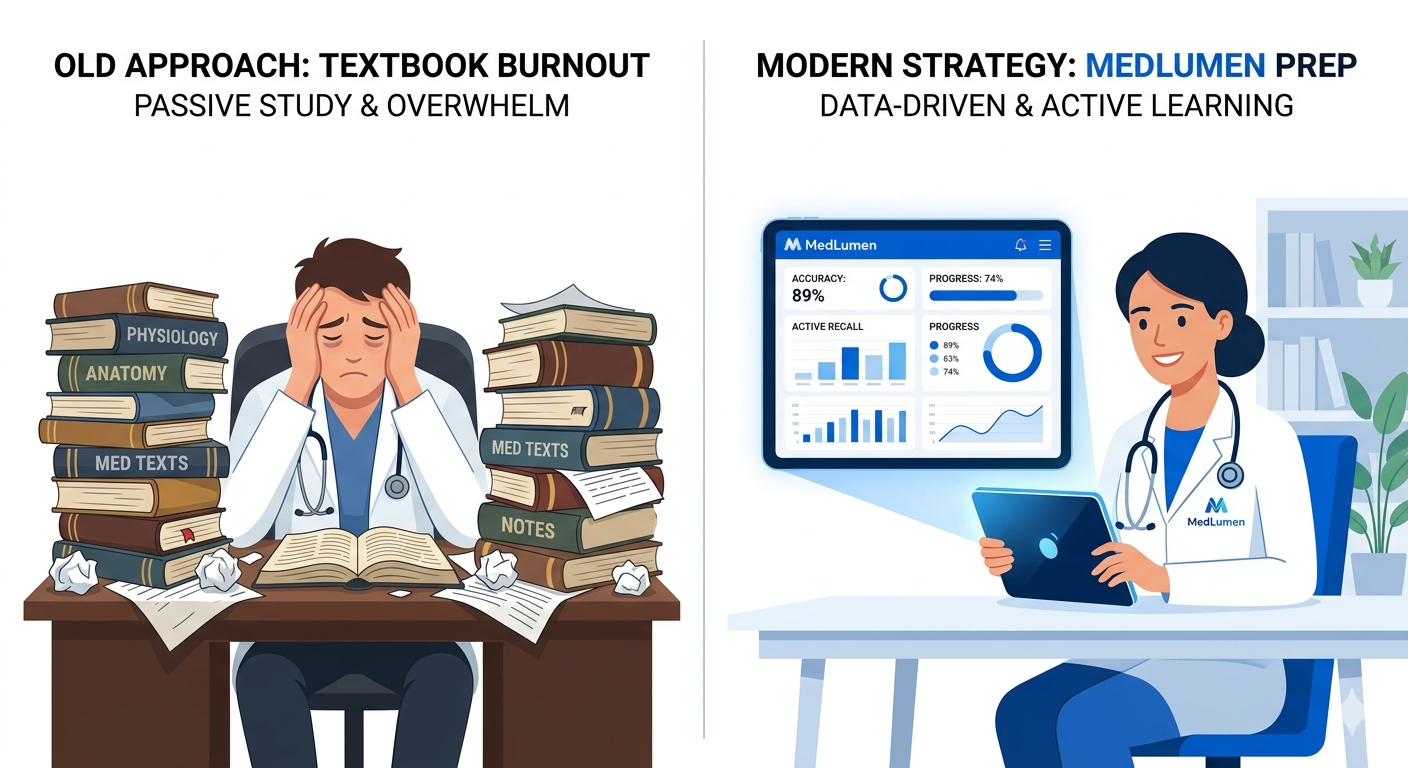
The reality is simple: hard work without a structured strategy leads to inefficient learning. Medical exams are not just about knowledge; they test application, pattern recognition and decision-making under pressure. Without a focused plan, you end up covering too much low-yield material while neglecting what truly matters.
Moreover, traditional study methods don’t adapt to your weaknesses. You might spend hours revising topics you are already good at while ignoring areas that actually need improvement. This creates a false sense of confidence, which can be dangerous in exam settings.
To avoid this trap, you must shift from passive studying to intentional, data-driven preparation. This is where modern tools and structured strategies like those used in advanced online medical exam prep platforms become essential.
The Science of Smart Studying: Focus on High-Yield Learning
One of the biggest mistakes candidates make is trying to “cover everything.” While this may sound logical, it is highly inefficient. Not all topics carry equal weight in exams and not all study methods yield the same results.
Instead, focus on high-yield topic areas that are frequently tested and carry significant marks. For example, when preparing for exams like PLAB or USMLE, certain subjects consistently appear in MCQs. Identifying and prioritizing these topics gives you a massive advantage.
Additionally, use active recall and spaced repetition. These scientifically proven techniques help you retain information longer and recall it faster. Instead of re-reading notes, test yourself frequently. This strengthens neural pathways and improves exam performance.
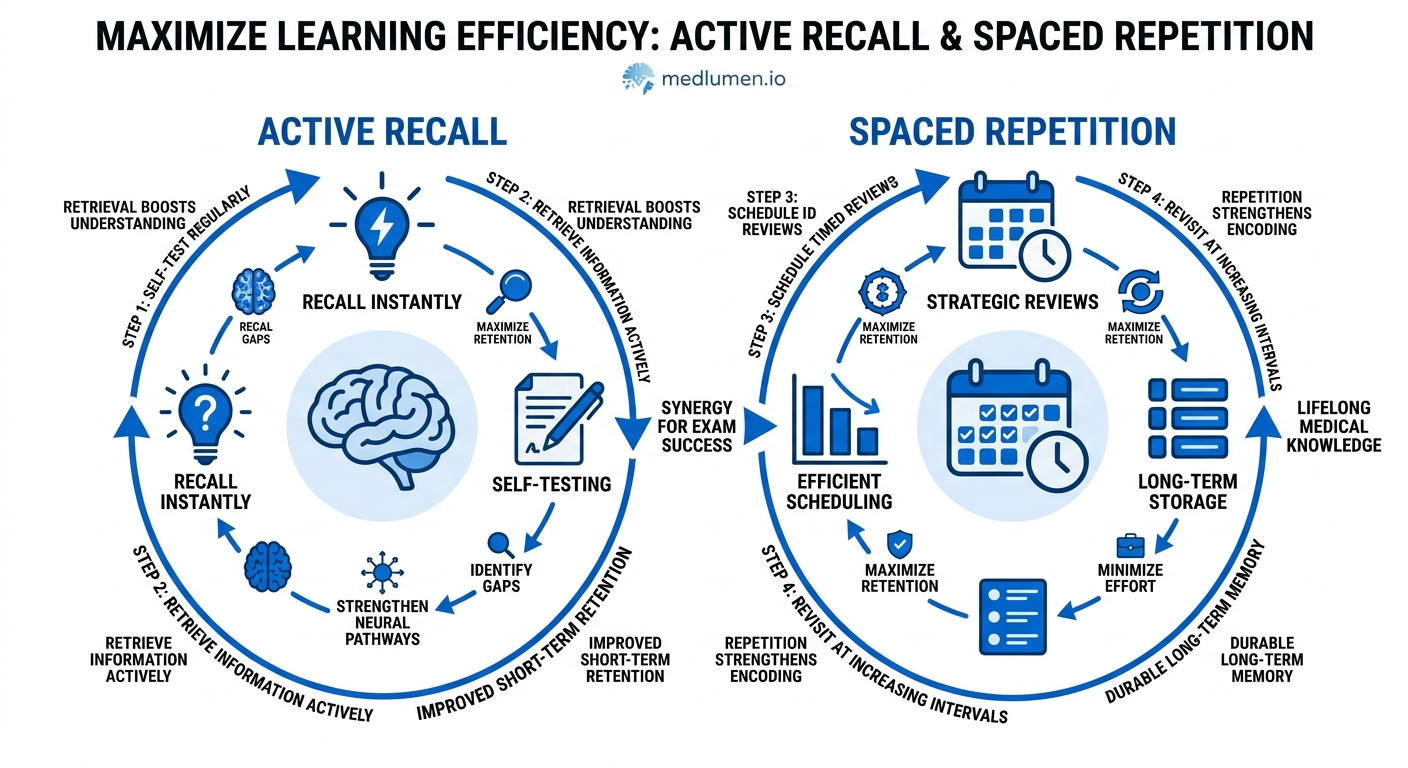
Modern platforms for online medical exam prep often incorporate these techniques automatically. They present questions strategically and revisit weak areas at the right time, ensuring maximum retention with minimal effort.
Build a Data-Driven Study Plan That Works for You
A generic study plan rarely works because every doctor has different strengths, weaknesses and time constraints. That’s why your preparation must be personalized.
Start by assessing your baseline knowledge through diagnostic tests or question banks. This will help you identify weak areas early on. Once you know where you stand, you can allocate more time to topics that need improvement.
Tracking your performance is equally important. Monitor metrics such as accuracy, speed and consistency. Over time, this data will reveal patterns helping you refine your strategy and focus on what truly matters.
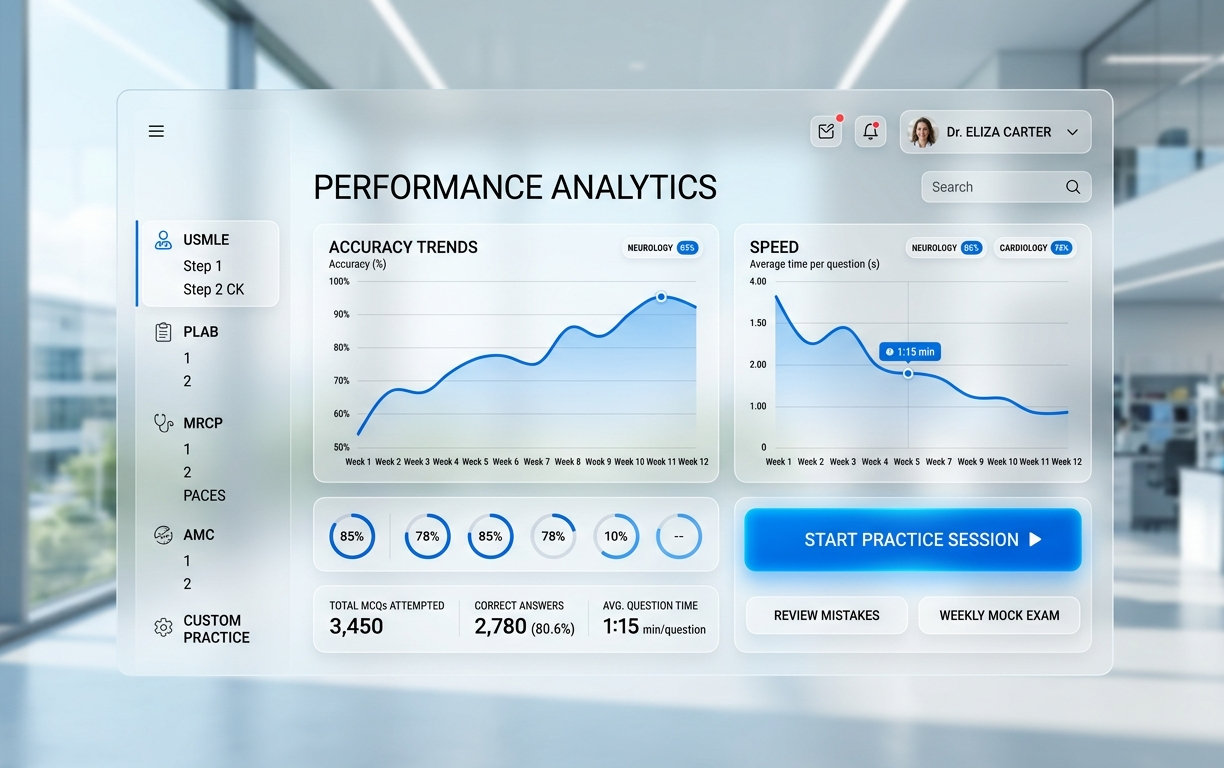
This is where intelligent platforms stand out. Instead of guessing what to study next, you get clear, actionable insights. For instance, if you are using tools similar to an MSRA question bank or PLAB 1 question bank, advanced analytics can highlight trends and guide your preparation effectively.
Master MCQs: The Core of Medical Exam Preparation
Let’s be clear, MCQs are the backbone of medical licensing exams. Your ability to interpret questions, eliminate wrong options and choose the best answer determines your success.
However, not all question practice is effective. Simply solving questions without understanding the logic behind them limits your growth. Instead, adopt a deep-learning approach:
First, focus on understanding why an answer is correct, not just memorizing it. Then, analyze why other options are wrong. This strengthens your clinical reasoning and reduces confusion in similar questions.
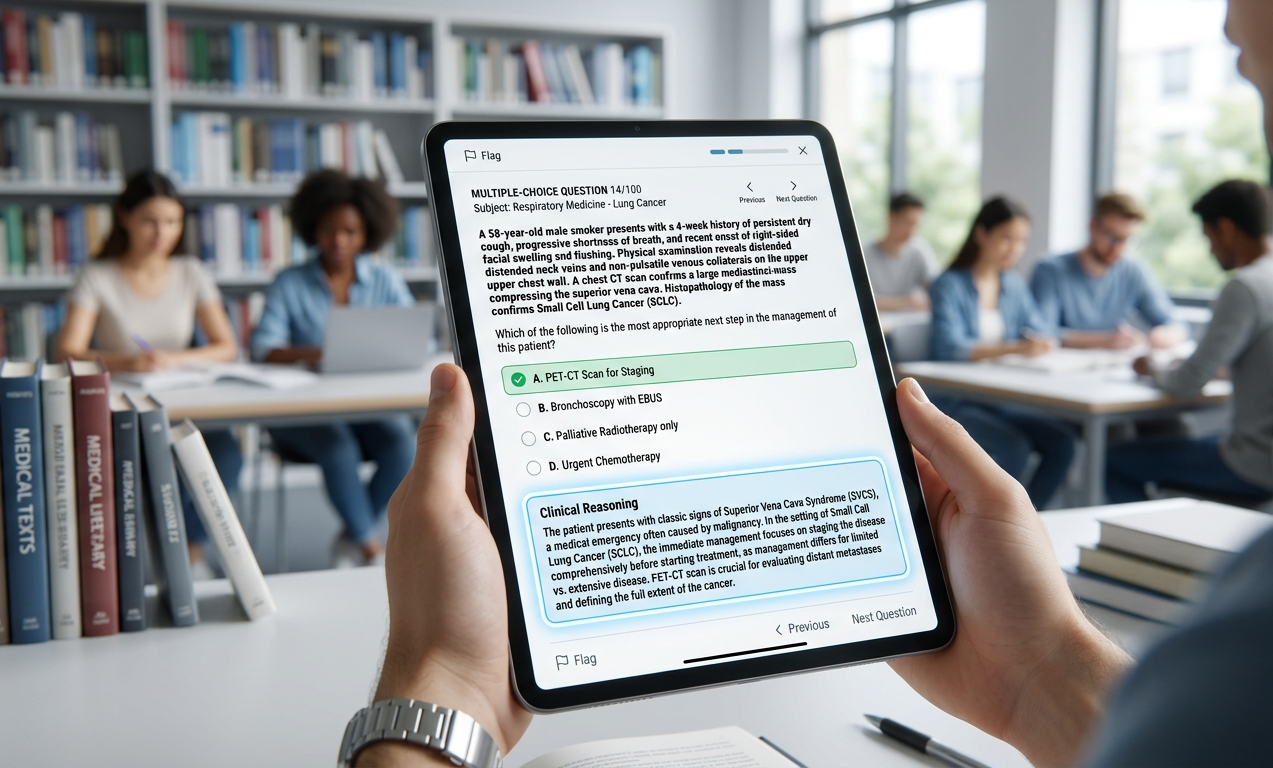
Secondly, practice consistently using high-quality resources. Whether you are working with a PLAB 1 question bank, MSRA question bank or PMDC step 1 past papers, ensure that the questions reflect real exam patterns.
Finally, review your mistakes thoroughly. Every incorrect answer is an opportunity to learn. Keep a mistake log and revisit it regularly to avoid repeating errors.
Time Management: Study Less, Achieve More
Time is one of the most limited resources for doctors preparing for exams. Many candidates struggle to balance clinical duties, personal life and study time. This makes efficient time management critical.
Instead of long, unfocused study sessions, break your schedule into shorter, high-intensity blocks. Techniques like the Pomodoro method (25–50 minute sessions) can significantly improve focus and productivity.
Prioritize tasks based on impact. Spend more time on weak areas and high-yield topics and less time on what you already know. This ensures optimal use of your limited time.
Additionally, integrate the study into your daily routine. Mobile-friendly online medical exam prep platforms allow you to practice questions anytime, anywhere, turning idle moments into productive study sessions.
One Strategy for All: Global Medical Exams Preparation Made Simple
If you are preparing for multiple exams across different countries, you might feel overwhelmed by varying formats and requirements. However, there’s good news: the core preparation strategy remains largely the same.
Most global medical exams test similar concepts: clinical reasoning, applied knowledge and decision-making. Whether you are preparing for PLAB, USMLE, MRCP or FMGE, the foundation is consistent.
This means you don’t need completely separate strategies for each exam. Instead, focus on building a strong conceptual base and practicing diverse MCQs. A unified approach simplifies your preparation and saves time.
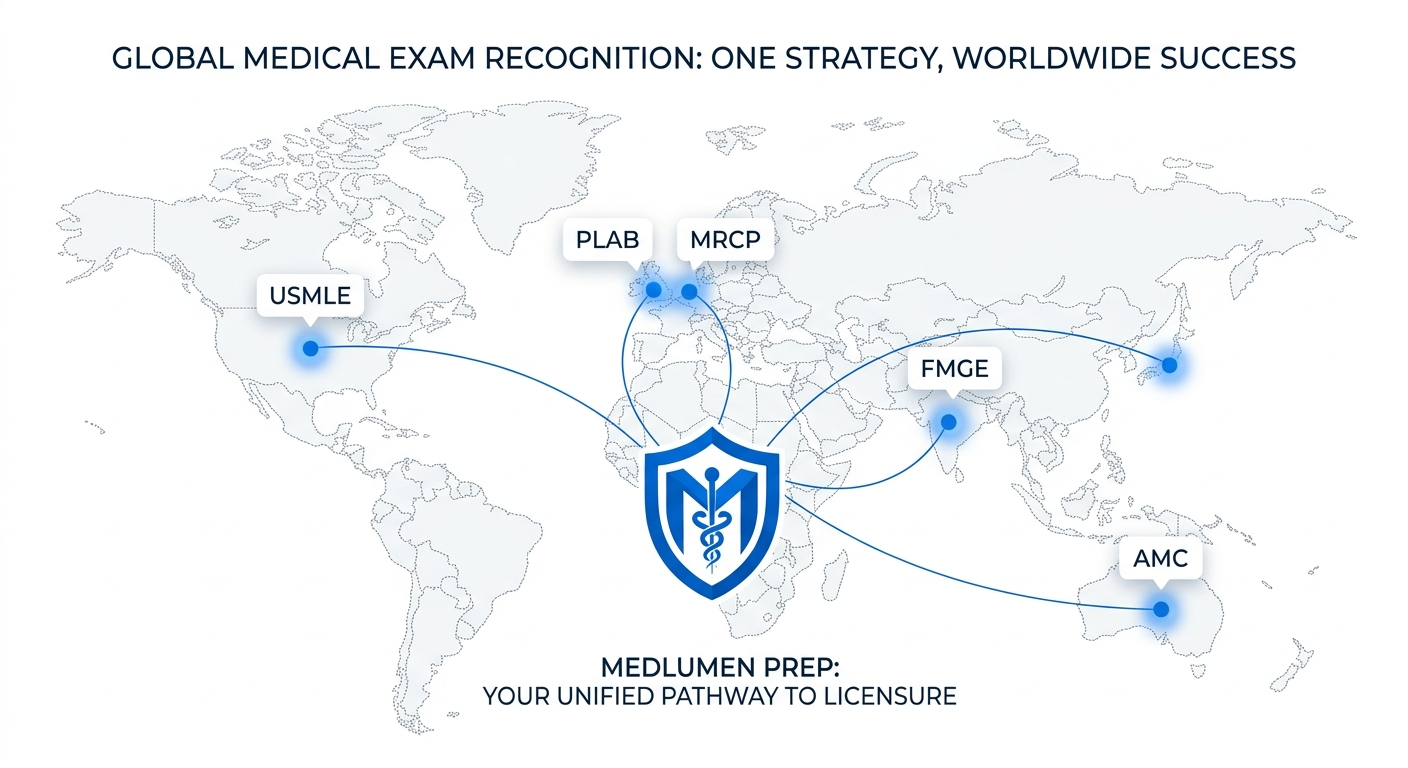
Platforms designed for global medical exams preparation make this process even easier. They offer a centralized system where you can prepare for multiple exams without switching between different resources.
Avoid These Common Medical Exam Preparation Mistakes
Even the most dedicated candidates can fail if they fall into common traps. Recognizing and avoiding these mistakes can significantly improve your chances of success.
One major mistake is passive studying, watching lectures or reading notes without active engagement. While it feels productive, it doesn’t improve retention or application skills.
Another mistake is ignoring weak areas. Many candidates prefer revising topics they are comfortable with, but this creates gaps in knowledge that can cost marks in the exam.
Lastly, inconsistent practice is a major issue. Solving MCQs occasionally is not enough. You need consistent, daily practice to build momentum and confidence.
By staying aware of these pitfalls, you can adopt a smarter, more effective approach to preparation.
The Rise of Online Medical Exam Prep: Why It’s a Game-Changer
Traditional study methods are rapidly being replaced by smarter, technology-driven solutions. Online medical exam prep platforms are transforming how doctors prepare for exams.
These platforms offer several advantages. First, they provide instant feedback, allowing you to learn from mistakes immediately. Second, they track your performance over time, giving you valuable insights into your progress.
More importantly, advanced platforms use AI to personalize your learning experience. They identify weak areas, recommend topics and adapt question difficulty based on your performance.
This level of customization is impossible with traditional resources like textbooks or static notes. As a result, online platforms help you learn faster, retain more and perform better.
Integrating Past Papers Into Your Strategy
Past papers are an invaluable resource in medical exam preparation. They provide insight into exam patterns, frequently tested topics and question styles.
For example, using PMDC step 1 past papers can help you understand the structure and difficulty level of the exam. This familiarity reduces anxiety and improves confidence on exam day.
However, don’t rely solely on past papers. Combine them with high-quality question banks and conceptual learning. This ensures a well-rounded preparation strategy.
Additionally, simulate exam conditions while solving past papers. Time yourself, avoid distractions and treat each session like a real exam. This builds endurance and improves time management.
Final Phase Strategy: How to Peak at the Right Time
The last few weeks before your exam are crucial. This is not the time to learn new topics; instead, focus on revision and consolidation.
Start by reviewing your weak areas and mistake logs. These are the topics most likely to cost you marks if ignored. Then, revise high-yield concepts and frequently tested questions.
Practice full-length mock exams regularly. This helps you build stamina and identify any remaining gaps in your preparation. It also improves your ability to manage time under pressure.
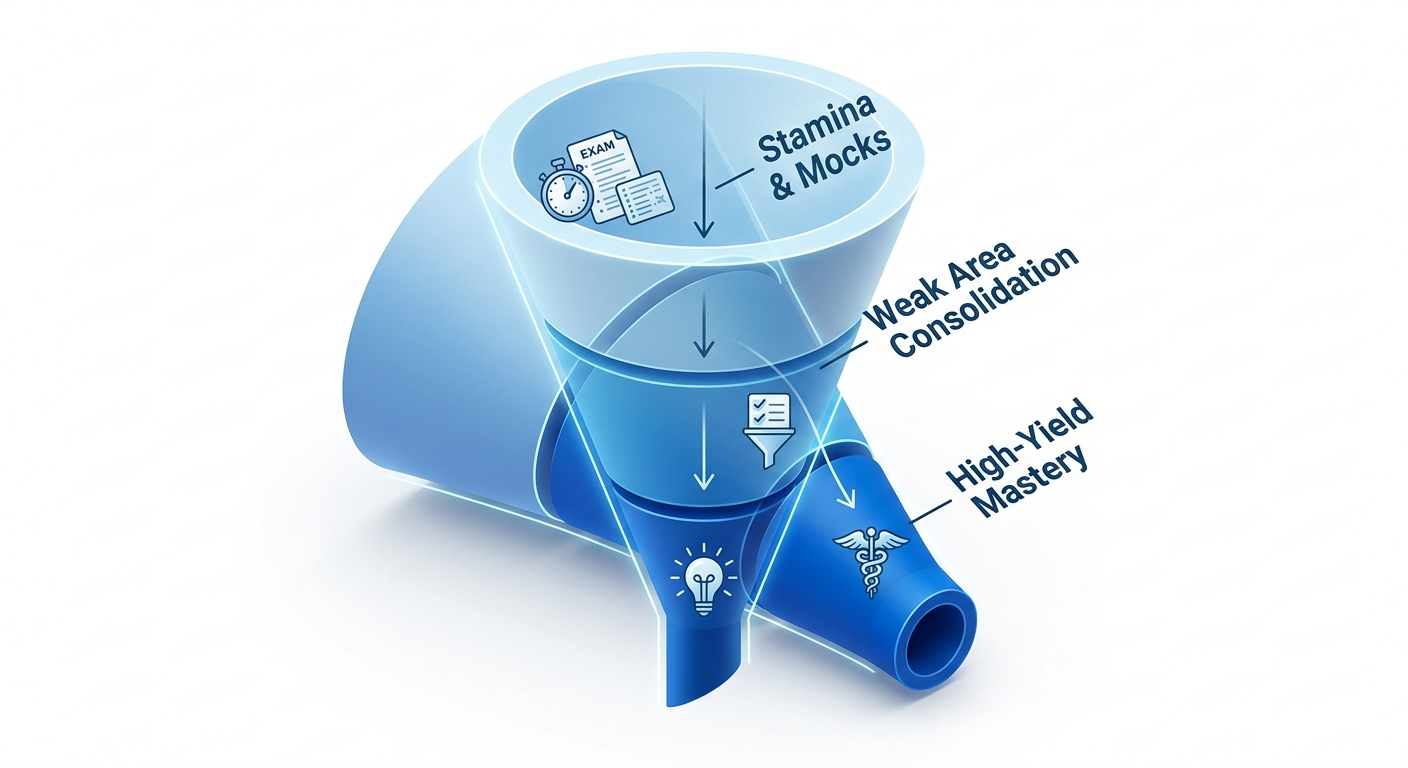
Finally, maintain a healthy routine. Sleep well, eat properly and avoid last-minute cramming. A clear mind performs far better than an exhausted one.
Conclusion
Passing medical licensing exams on your first attempt is not about studying harder; it is about studying smarter. With the right strategies, tools and mindset, you can transform your preparation and achieve your goals efficiently.
Focus on high-yield learning, practice MCQs consistently, track your performance and leverage modern online medical exam prep platforms. Avoid common mistakes, manage your time effectively and stay consistent throughout your journey.
Most importantly, embrace a precision-driven approach to learning. When your preparation is guided by data, personalized insights and smart tools, success becomes predictable, not uncertain.
Your journey to becoming a globally licensed doctor starts with the right strategy. And with the right approach, passing on your first try is not just possible, it is expected.